
Cocaine in the Cargo Again: CBP Pulls $2.7 Million From a Beverage Load at Pharr

Philicia Chaika
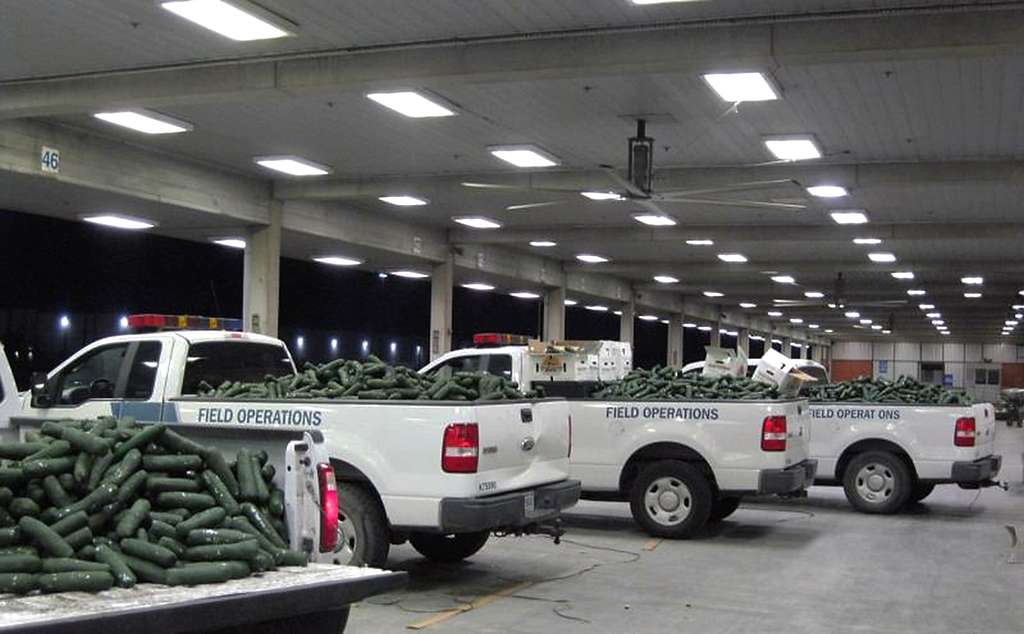
CBP officers at the Pharr International Bridge cargo facility seized $2.78 million in cocaine hidden in a tractor-trailer whose shipment was manifested as bottled beverages. The seizure happened July 15, when officers referred a tractor-trailer arriving from Reynosa, Mexico, for a secondary inspection. A nonintrusive imaging scan flagged anomalies inside the trailer, and a physical inspection turned up 79 packages of suspected cocaine weighing 208.33 pounds (94.5 kilograms). CBP put the street value at $2,781,000. "This successful interception highlights the effectiveness of our layered enforcement strategy. Through the combination of advanced technology, and the keen instincts of our frontline personnel, we continue to identify and dismantle smuggling attempts," said Carlos Rodriguez, Port Director at the Hidalgo/Pharr/Anzalduas Port of Entry. The bottled-beverage load is the latest in a run of large cargo seizures at this one crossing. Officers at the same Pharr bridge pulled $3.7 million in cocaine out of a trailer manifested as cucumbers on June 24, and nearly $11 million in methamphetamine out of a cargo-facility load listed as cabbage on July 6. Each of those shipments used the same method the July 15 load did: real commercial freight moving through a commercial lane, with the drugs built into the cargo rather than smuggled between the ports. The three busts also ran through the same detection sequence. In each case a nonintrusive imaging scan flagged anomalies inside a trailer that had cleared its paperwork, and only a physical inspection confirmed the load. Port Director Rodriguez pointed to that layering of technology and officer judgment in his statement, and the pattern shows why the manifest alone stops nothing: cucumbers, cabbage and now bottled beverages all passed as ordinary freight until an imaging scan gave officers a reason to open the trailer. The cover load changes, the method does not. Reynosa keeps turning up as the origin. The July 15 cocaine came across from there, as did the $9.3 million methamphetamine load officers stopped at the Pharr cargo facility on June 19. The two cities sit directly across the river, and the commercial lane between Reynosa and Pharr carries the legitimate produce traffic that the cartels use as cover. That method is the norm rather than the exception on this stretch of border. Ports of entry accounted for 74.7 percent of the narcotics weight CBP seized along the Texas border in the first quarter of 2026, and the Laredo Field Office, which runs the Pharr, Hidalgo, Roma and Brownsville crossings, moved more drug weight than any other single CBP component in the state, 35.4 percent of the total.
Our contacts:
contact@texasborderexaminer.com
editor@texasborderexaminer.com
© 2026 TEXAS BORDER EXAMINER
